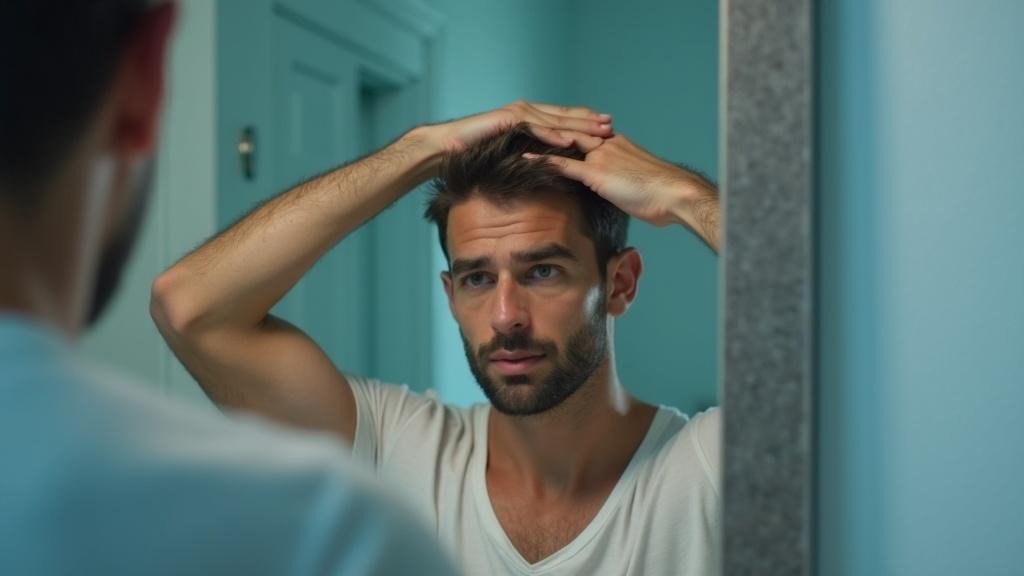
The most common mistake people make is spending money before they know what stage of hair loss they are actually dealing with. They buy a three-month supply of something, wait, see little change, and switch to something else. That cycle gets expensive fast. Knowing your baseline, honestly assessed, changes everything.
1. Generic Minoxidil (Rogaine-Equivalent OTC)
Start here. Full stop.
Generic 5% minoxidil foam or solution runs anywhere from $10 to $20 for a month’s supply at most pharmacies and warehouse stores. The active ingredient is identical to brand-name Rogaine. Minoxidil is the most widely studied topical hair-loss treatment available without a prescription, and it works on both men and women (women use 2%). You apply it twice daily, results take at least three to four months to show, and if you stop using it, whatever you gained comes back off. That last part is not a flaw, it is just how the drug works. Set expectations accordingly.
2. HairLine AI (Free Norwood Assessment Tool)
Before spending a dollar on any program, it makes sense to know what you are working with. HairLine AI is a free, browser-based tool that reads a webcam shot or uploaded photo, runs it through AI vision processing, and returns a Norwood stage classification along with a rough graft count and transplant cost estimate, all without creating an account or entering a credit card.
That is genuinely useful. Most people guess their stage wrong, and guessing wrong means picking the wrong approach. Someone at Norwood 2 and someone at Norwood 5 have very different options in front of them.
It is worth being honest about what this is and is not. HairLine AI is an educational starting point, not a clinic. It does not prescribe anything, does not sell medication, and a result from it is a reference point rather than a clinical diagnosis. Think of it as a confident first read before you talk to a dermatologist or commit to a subscription. For a free tool with no friction, it earns its spot on this list.
See also: The Balance Between Innovation and Digital Wellbeing
3. Keeps (3-Month Plans)
Keeps built its whole model around the two evidence-backed treatments: finasteride (prescription) and minoxidil. On a three-month plan, pricing drops noticeably compared to month-to-month, and shipping is around $5. The online consultation connects you with a licensed clinician, which matters since finasteride is not OTC.
One thing worth knowing: finasteride affects a minority of men with sexual side effects, and it must be taken continuously to maintain results. Keeps is straightforward about this during the intake process, which is more than some competitors manage.
4. Hims (Widest Treatment Menu)
Hims is the only major telehealth brand currently offering topical finasteride, which some men prefer because it may carry a lower systemic side-effect profile than the oral version (though research is still ongoing). Their catalog also includes oral finasteride, both topical and oral formulations of minoxidil, and bundled combination kits. The menu is wider than almost anyone else in this category.
Pricing varies a lot depending on what you choose. Shop the combo plans rather than individual products if budget is the concern.
5. Ketoconazole Shampoo (OTC Anti-DHT Adjunct)
Not a replacement for finasteride or minoxidil. But ketoconazole 1% shampoo (brands like Nizoral, widely available for $10 to $15) has a reasonable body of evidence suggesting it can reduce scalp DHT and complement primary treatments. Using it two or three times a week adds almost nothing to a monthly budget. Dermatologists often recommend it as a supporting measure, not a main event.
6. Roman (Ro) for Generic Oral Finasteride
Roman keeps it simple. Generic oral finasteride, a clinical consult, and minoxidil solution. No foam, no topicals beyond the solution. If you want the basics without add-ons, Roman’s pricing on generic finasteride is competitive and the telehealth process is quick. It is a lean option for men who already know what they want and just need the prescription handled.
7. Happy Head (Custom Topical Formulas)
Happy Head sits at the higher end of “budget,” but their custom compounded topicals (which can combine finasteride, minoxidil, and other agents in one application) can actually replace two separate products. If buying both finasteride and minoxidil individually, the math sometimes comes close. The appeal is simplicity plus prescription-grade ingredients in one bottle. Not the cheapest entry point, but a reasonable value if you are already spending on both actives separately.
A Word Before You Buy Anything
This list is informational. None of it replaces a conversation with a dermatologist or licensed clinician, particularly before starting finasteride. Results from any hair-loss treatment vary by individual, take months to appear, and require ongoing use to maintain. What works well for one person’s pattern and timeline may not work the same way for another.
Common Questions
Does it matter which Norwood stage you are at before choosing between Keeps, Hims, or Roman?
It matters more than most people expect. All three platforms offer finasteride and minoxidil, but Hims adds topical finasteride, which some clinicians suggest for men who want to limit systemic absorption. Knowing your stage, even roughly from a tool like HairLine AI, helps you decide whether a basic plan or a combination approach makes more sense before your first telehealth consult.
Can you use generic minoxidil and ketoconazole shampoo together without a prescription program?
Yes, and for some people at early stages this is the lowest-cost starting point. Generic minoxidil runs $10 to $20 per month, and Nizoral adds maybe $3 to $5 per month when used two or three times a week. Neither requires a prescription. Just understand this combination does not address DHT the way finasteride does, so results may plateau sooner for men with significant androgenetic alopecia.
How accurate is HairLine AI’s Norwood staging compared to a dermatologist’s assessment?
HairLine AI is a reference tool, not a clinical instrument. It processes a photo and returns a Norwood classification, which is useful for orientation, but lighting, photo angle, and hair styling all affect what the algorithm sees. Treat the result as a starting estimate. A dermatologist examining your scalp directly, ideally with a dermoscope, will give you a more reliable staging and can spot conditions like telogen effluvium that a photo tool cannot distinguish from pattern loss.
Is Happy Head actually worth the higher price compared to buying finasteride and minoxidil separately through Roman or Keeps?
It depends entirely on what you are already spending. If you are paying for oral finasteride plus a separate minoxidil product, Happy Head’s compounded topical that combines both actives can come close in cost while cutting your routine to one daily application. If you only need one of the two actives, the separate route through Roman or Keeps is almost certainly cheaper.
What happens to hair you have regrown if you cancel a subscription with any of these programs?
The regrowth goes away. This applies to minoxidil, finasteride, and any compounded product containing them. Both drugs require continuous use to maintain results, and discontinuation typically reverses gains within several months. This is not specific to any one brand, it is how the medications work. Budget programs are only a good deal long-term if you are prepared for an ongoing commitment, not a short course.
Sources
- American Academy of Dermatology: published clinical guidance on minoxidil and finasteride for androgenetic alopecia
- Keeps, Hims, Roman, Happy Head official product and pricing pages (publicly available, 2025)
- National Institutes of Health: published studies on ketoconazole shampoo and androgenetic alopecia
- HairLine AI product description (myhairline.ai, publicly accessible)
